

Shifting Realities: A Conversation with Victoria Holdt
Written by Hannah Halbheer for Orlando Press
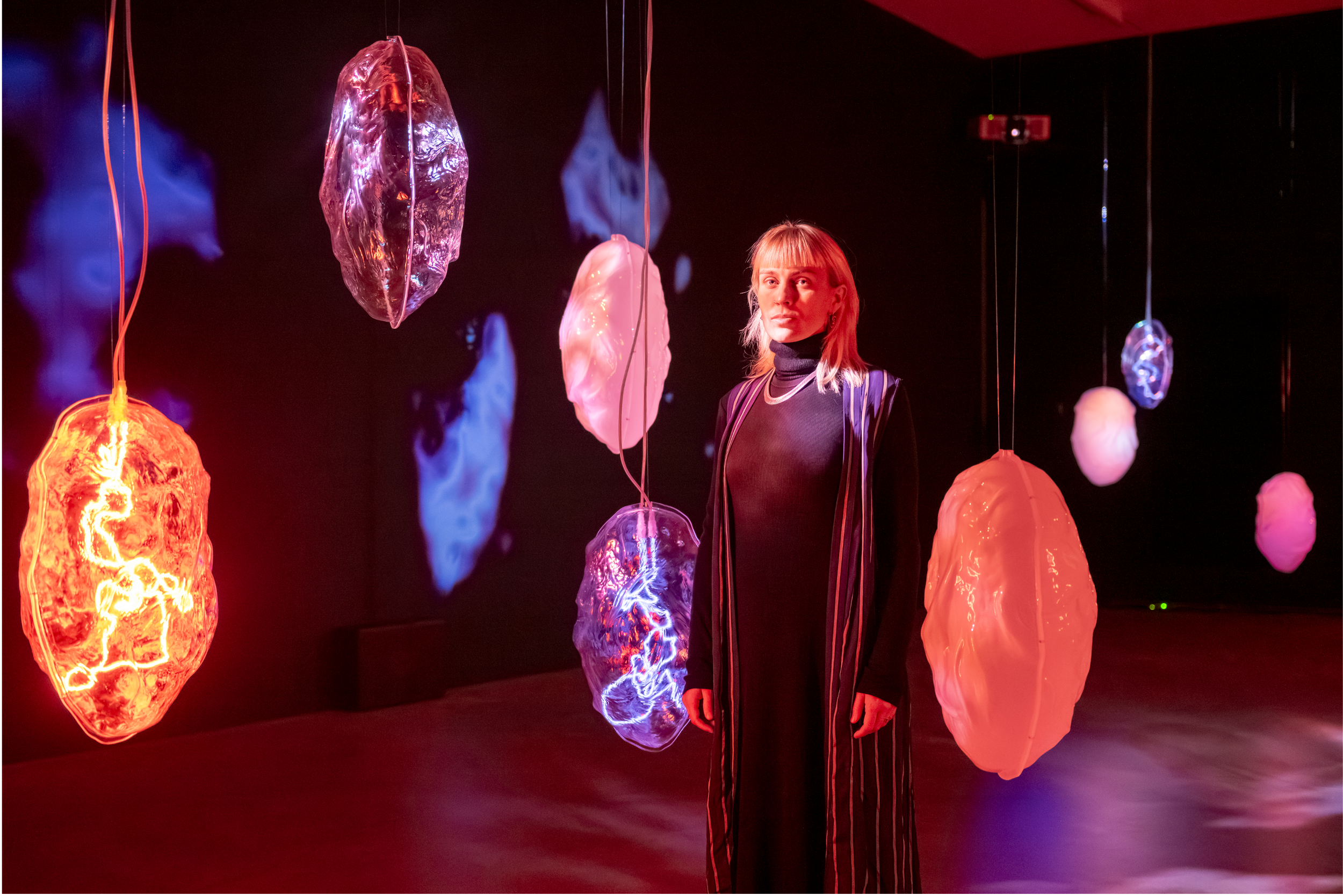
At times it can feel like life happens almost without realizing: A headline, a glance, a quick reaction. By the time something has happened, it has already been replaced. In such a fast-paced world, entering an installation by Victoria Holdt is like crossing into another, slower, reality.
Victoria creates immersive installations across video, sculpture, and sound, where familiarity meets the mysterious and the analog intersects with the technological. She draws on cycles, patterns, and behaviors, while her work moves between micro and macro perspectives.
There is no single point of entry into her work. It does not begin with explanation, but with a shift in attention. With a step closer, an adjustment of a position, a pause. Light moves across a surface, reflections appear and withdraw. For Victoria, space is not a backdrop. It is something to move through, to register physically. The body becomes a measure of distance, of proximity, of orientation. There is a quiet choreography at play, even in stillness, drawing the viewer into the work rather than placing them in front of it.
the dance of moving images: how video becomes sculpture
“Ambience, space and movement are linked for me. I think because I used to dance a lot as a child, and I think deep down that is where my love to moving and moving images comes from.”
Victoria uses video as a two-dimensional sculpture that introduces a certain tension through the movement of images. Her work exists in space, yet she returns to a medium defined by its flatness. But it is precisely this contrast that draws the artist’s fascination. Rather than treating video as an image to be viewed, it allows for the rapid construction of atmosphere, a way of sketching space without physical boundaries. Removed from its conventional framing on screen, it becomes embedded within installations. A layer that carries movement, rhythm, and a certain instability. What appears flat begins to behave spatially. The distinction between physical object and digital moving image begins to loosen.
Victoria’s videos resist clarity. They do not explain or anchor. Instead, they operate through fragments – sequences that feel suspended, almost feverish. Bodies, textures, surfaces. Patterns that suggest something organic, yet remain elusive. There might be the sense of a moment held in tension, just before it shifts. Recognition comes before understanding. Something feels familiar, though it cannot be fully placed.
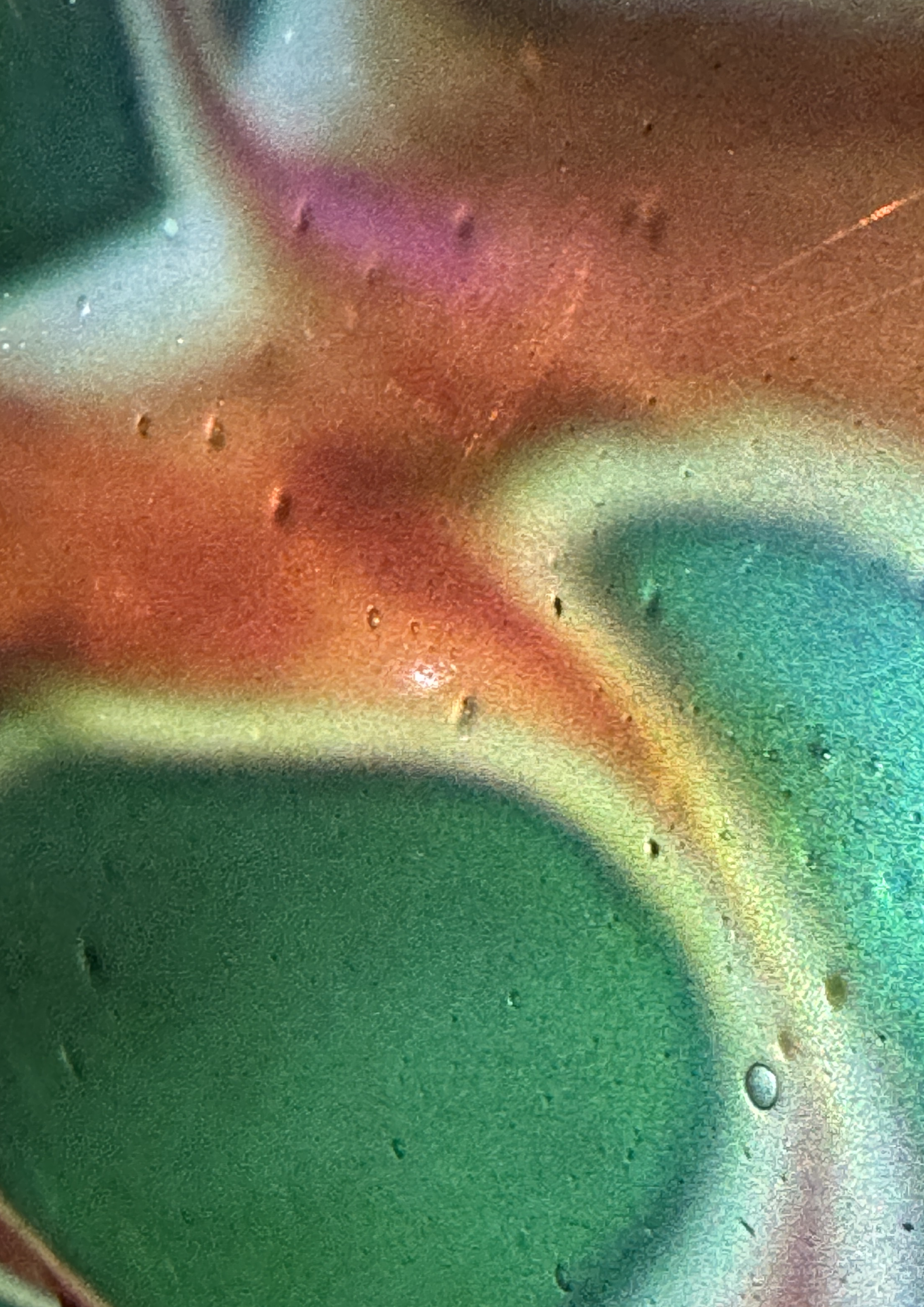
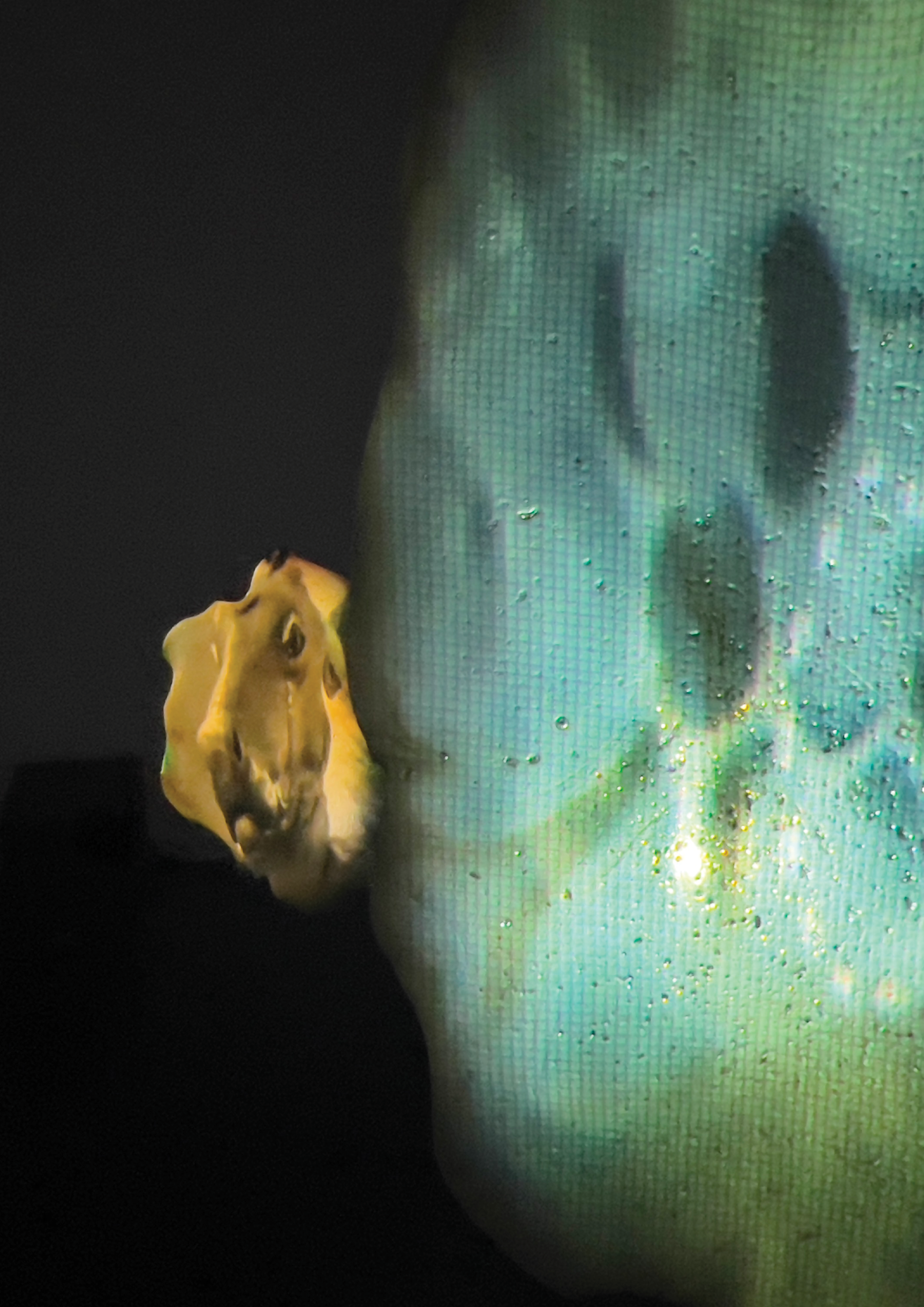
opening new perspectives on what is already here: a play with micro- and macro scales
“I used to stare into these waters for a long time and observed the organisms that lived in there. A whole other universe just in front of our noses, coexisting next to us. Like a little babushka. Sometimes I am wondering if there is something watching us like we are watching a newt in a pond”
Scale, in Victoria’s work, is never fixed. What is small expands. What is distant comes close. This attention to surfaces, textures, almost invisible structures, stems from a way of looking that is slow, sustained. Watching, rather than scanning. Remaining with something long enough for it to change.
Rather than reproducing the world we live in, Victoria’s work translates it. The microscopic becomes something to enter. Yet what appears as organic footage is often constructed. Surfaces are manipulated artificially, and digital layers added until they become objects with a different identity. What emerges is not a hidden reality brought into view, but a parallel one. Familiar, yet slightly displaced.
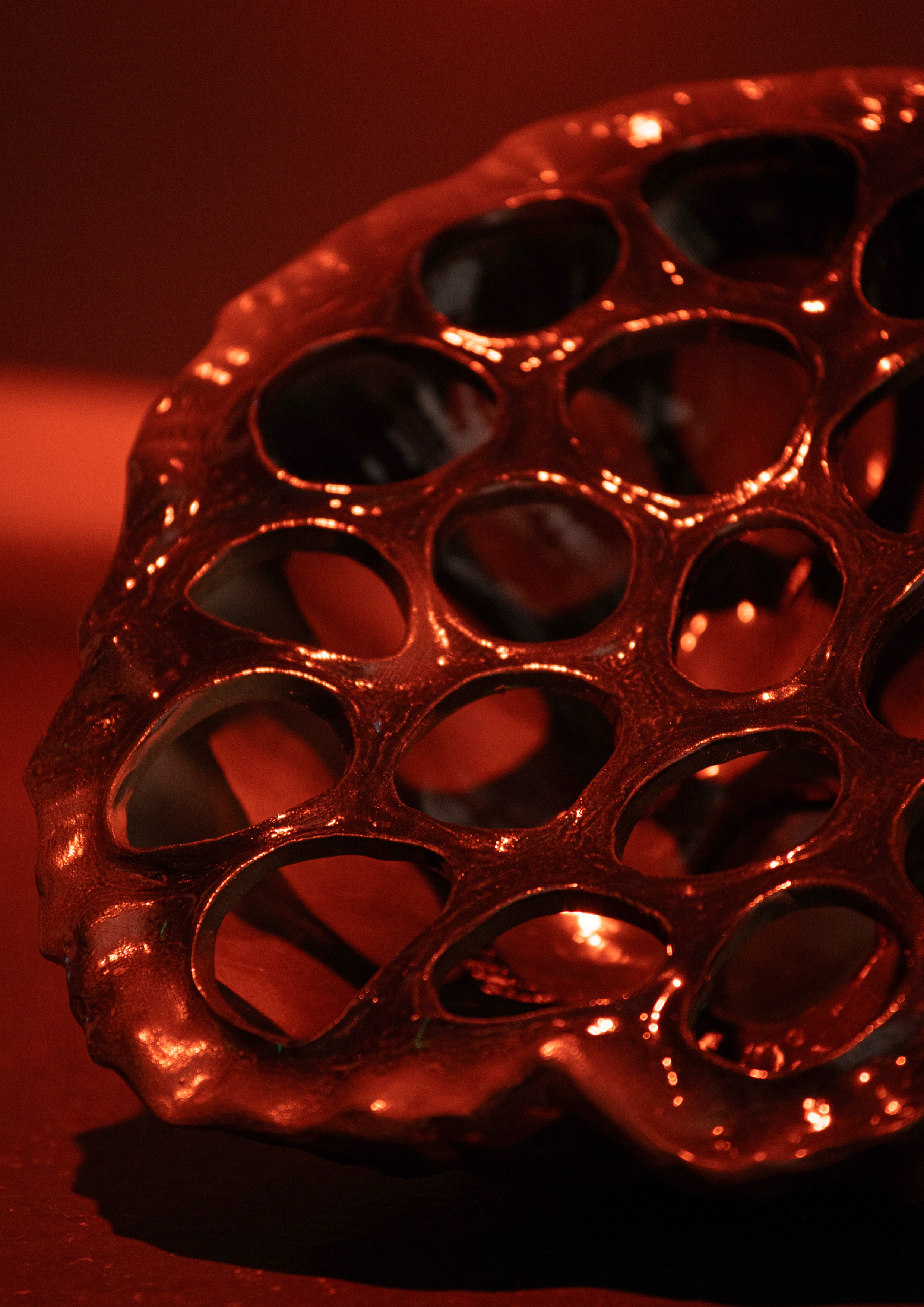
References to nature seem obvious but remain indirect. A form may recall a cocoon, a surface a plant, but these associations are never fixed. They are translated through material, color, and scale – into something that sits between the organic and the artificial. What results is an object that resists clear categorization, that asks to be experienced rather than decoded.
production process as negotiation: the behavior of materials
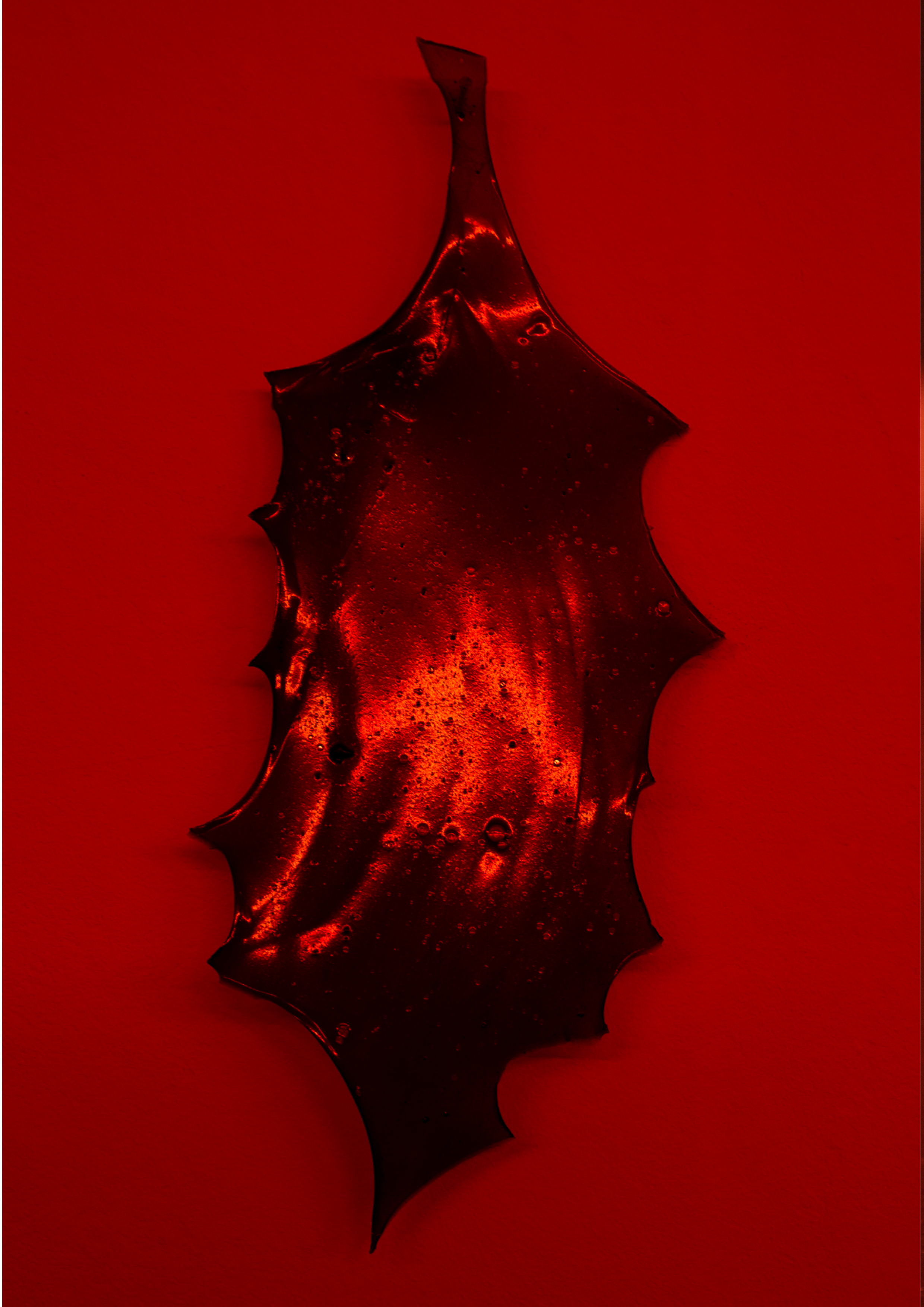
“Hide glue has not left me for a couple of years now. It started as small experiments, and I had to really test my way towards the best ratio of water and glue and create my own specific method in how to work with it. I am still learning a lot from this material. I like the fact that to some extend it is recyclable and natural, biodegradable. It somehow disgusts me, but I am also too fascinated by it to let it go because I feel there are so many more possibilities to play with it.”
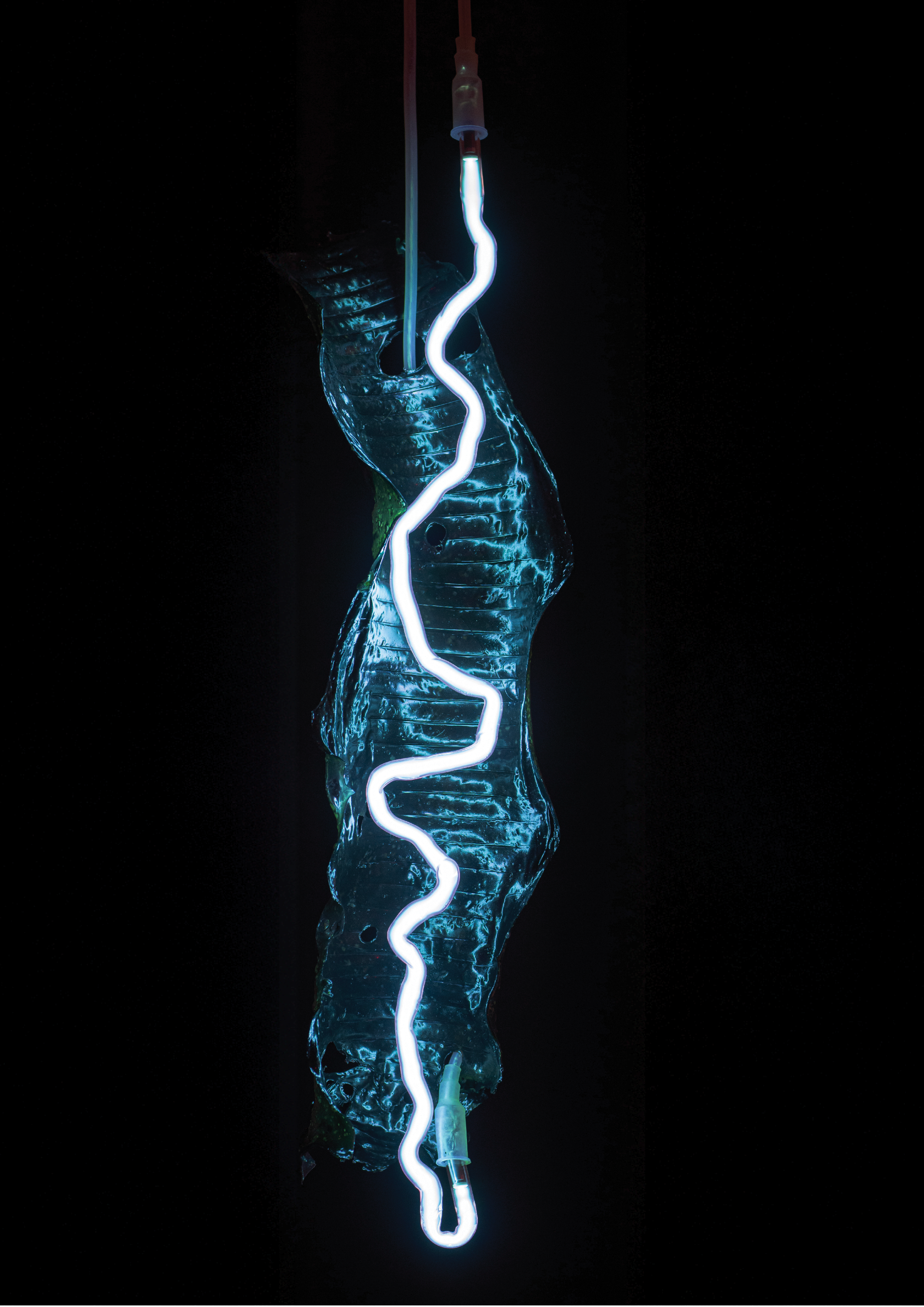
Materials act, they resist, they introduce their own logic. Neon, plexiglass, ceramics, organic compounds – each carries a specific behavior. Surfaces reflect or absorb. Structures bend or refuse to. The work evolves through this interaction. Some materials continuously return, draw a special fascination to the artist. They remain open, requiring repeated testing. The process is a negotiation rather than a sequence.
a lesson of how to reconsider what we see
To encounter Victoria’s work is to adjust one’s pace. To remain with something slightly longer than usual. To allow perception to recalibrate. There is no single focal point, no defined beginning or end. Instead, there is a field of relations between elements and materials. Between the work and the viewer. Meaning does not arrive fully formed. It emerges gradually, through attention. Victoria shows us how to look closer, and how we come to recognize what we think we see.
